This is what the Pole & Line logo stands for
Did you know that all our tuna is caught using pole & line methods? We are very proud of this, which is why you can find the Pole & Line logo on all our tuna cans! This way of catching tuna is a traditional method with minimal bycatch and does not damage the seabed. That's why we only work with tuna fisheries that, in addition to being MSC-certified, fish with these methods. These include pole and line, trolling lines, and handlines.
Why is there a difference in bycatch?
With bycatch, we mean fish and other marine animals that are accidentally caught and are not the target species. This can be an immature tuna, another fish species, or another marine animal such as a sea turtle. Tuna fisheries that use longlines or purse seines with Fish Aggregating Devices (FADs) have a relatively high amount of bycatch. This is because longlines with hooks stay in the water for a long time, attracting other species. With purse seines using FADs, all fish that gather around a FAD are caught, other species often included.
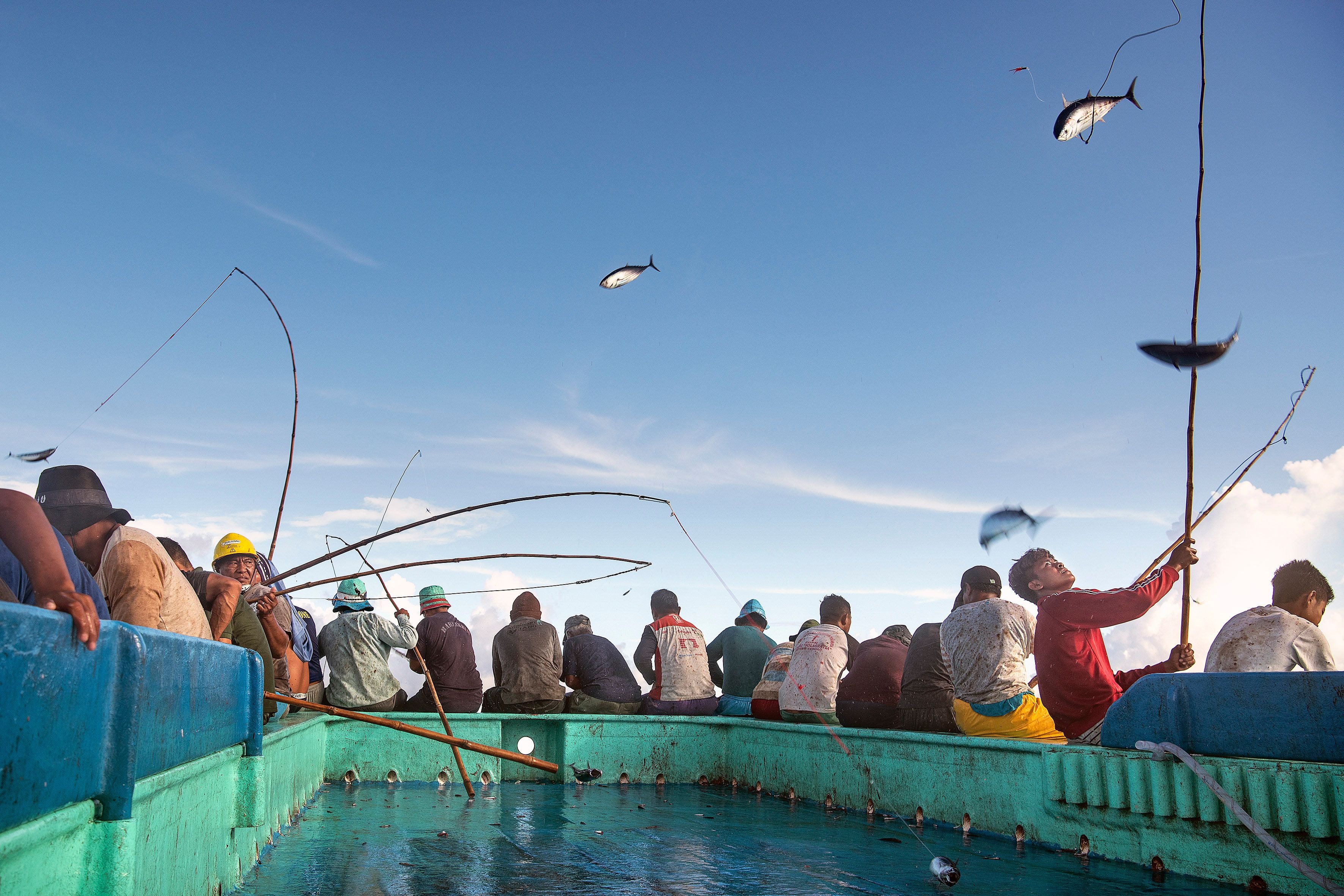
Tuna fisheries that use pod & line methods have virtually no bycatch. This is because fishermen target a school and use specific bait and hooks that only attract tuna. Furthermore, the fisherman immediately reels in the line and can therefore identify whether the hooked fish is the target species. If not, the fish can be released immediately without being endangered.
How can the pole & line method be so selective?
With the pole & line method, a tuna's hunting instinct is stimulated. This instinct causes them to hunt a school of fish en masse, often called a 'feeding frenzy'. They snap at anything that glimmers even slightly. This is the perfect moment for fishermen to lower their lines with hooks into the water. A feeding frenzy is mimicked by breaking the water's surface with water jets from the boat and throwing live bait into the water. To the tuna, it looks as if their hunted school of fish (the bait) is being cornered and birds are diving into the water to catch fish. The tuna doesn't miss this opportunity and eagerly bites the bait and the fishermen's gleaming hooks. The fishermen reel in the line as soon as they get a bite.
Pole & Line Logo
 The pole and line logo that appears on Fish Tales tuna products.
By placing a clear logo on our packaging, consumers can immediately see that all our tuna is caught with pole & line. This can be the traditional pole and line, trolling lines, or handlines. Trolling lines and handlines are similar to the traditional pole and line. With trolling lines, instead of multiple poles, you have two large poles that extend out from the boat with lines attached. With handlines, you don't have a pole; the fisherman holds the spool of line directly. Just like with pole & line, trolling lines and handlines involve bringing the catch in one by one, resulting in hardly any bycatch. Therefore, these methods fall into the same category and also meet our requirements for bearing the Fish Tales Pole & Line logo.
More info?
Here you can read more about our Pole & Line logo, the requirements we set for it, and how we monitor them!